
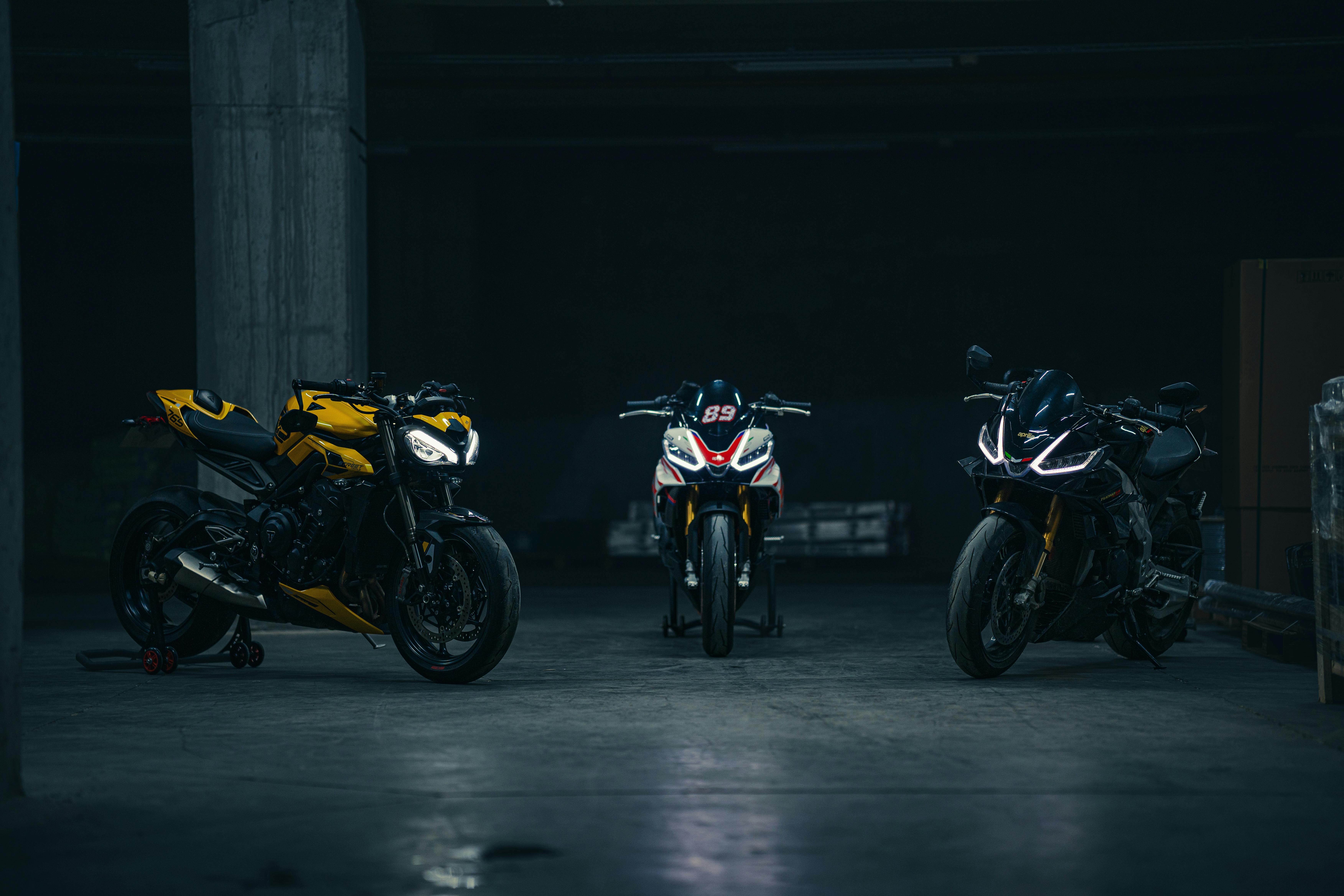
In 2026, motorcycle safety is no longer just about passive protection. Discover how groundbreaking Advanced Rider-Assistance Systems (ARAS), intelligent smart helmets, and revolutionary airbag vests are transforming rider safety, offering unprecedented collision avoidance and active protection. This ultimate guide helps you compare the best motorcycle safety technologies and make informed purchasing decisions to safeguard your rides and potentially lower insurance costs.
Introduction to the Topic
The roar of an engine, the wind in your face, the unparalleled freedom of two wheels – motorcycling is an experience unlike any other. But with that exhilaration comes an inherent risk, a fact every rider acknowledges. For decades, safety largely revolved around robust helmets, protective leathers, and the rider's own skill and vigilance. While these remain foundational, the year 2026 marks a pivotal shift. We are now firmly in an era where cutting-edge technology is actively intervening to prevent accidents and mitigate injuries, rather than just reacting to them.
Welcome to the revolution of Advanced Rider-Assistance Systems (ARAS) and integrated smart protective gear. These aren't just futuristic concepts; they are tangible, market-ready solutions that are fundamentally changing the safety landscape for motorcyclists. From radar-guided adaptive cruise control to AI-powered blind-spot detection and lightning-fast airbag deployment, the goal is clear: to make every ride safer, more confident, and ultimately, more enjoyable. This article will delve deep into these transformative technologies, helping you understand, compare, and choose the best options to safeguard your passion.
Backgrounds & Facts
Motorcycle safety has always been a journey of continuous improvement. From the simple leather caps of early riders to today’s multi-layered composite helmets, and from basic jackets to abrasion-resistant suits with integrated armor, progress has been steady. The introduction of Anti-lock Braking Systems (ABS) in the late 1980s and Traction Control Systems (TCS) more recently were monumental leaps, offering electronic assistance to prevent loss of control in critical situations. However, these systems primarily focus on vehicle dynamics once a hazard is present.
The new wave of ARAS takes a proactive stance. Leveraging an array of sensors – radar, lidar, ultrasonic, and high-definition cameras – coupled with sophisticated Artificial Intelligence (AI) algorithms, these systems actively monitor the rider's surroundings. They can detect potential hazards long before the human eye or brain can fully process them, providing warnings or even initiating interventions. The impetus for this technological surge is clear: despite advancements in passive safety, motorcycle accident rates remain a significant concern globally. According to recent data, a substantial percentage of motorcycle accidents involve other vehicles, often due to a driver's failure to see the motorcyclist. ARAS aims to address precisely these scenarios, acting as an extra set of eyes and a faster reaction time.
Beyond ARAS, integrated protective gear has also undergone a radical transformation. Smart helmets now offer not just impact protection but also advanced communication, navigation, and even rear-view camera feeds. Airbag vests and jackets, once bulky and complex, are now sleek, wirelessly activated, and deploy in milliseconds, offering unparalleled protection to vital organs in a crash. These advancements represent a holistic approach to safety, covering both accident prevention and injury reduction.
Expert Opinion / Analysis
“The evolution of motorcycle safety tech in 2026 is nothing short of revolutionary,” states Dr. Anya Sharma, a leading expert in vehicular safety systems and founder of 'RiderSafe Innovations'. “For years, we've talked about the ‘invisibility’ factor for motorcyclists. Now, with sophisticated radar and camera systems, we’re giving riders the tools to be seen, and more importantly, to anticipate and react to unseen threats.”
Dr. Sharma emphasizes that while the technology is incredibly powerful, it’s designed to augment, not replace, rider skill. “ARAS provides an invaluable layer of awareness and a safety net. Adaptive Cruise Control reduces rider fatigue on long stretches, while Blind Spot Detection is a game-changer for lane changes. But the rider remains the ultimate decision-maker. The AI is there to provide timely, accurate information and, in some cases, gentle intervention, giving the rider more time to react.”
The market analysis reveals a rapid adoption curve, particularly among new bike purchases and riders upgrading their existing gear. “Initially, there was some skepticism about tech integration, concerns about distraction, or even a perceived loss of the 'pure' riding experience,” Dr. Sharma explains. “However, as systems become more refined, intuitive, and seamlessly integrated – often with customizable sensitivity settings – riders are realizing the immense benefits. We’re seeing a significant shift in perception, with safety tech now being viewed as a crucial investment rather than a luxury.”
One of the key challenges, she notes, is standardization across manufacturers and the aftermarket. “While major OEMs like BMW, Ducati, and KTM are leading the charge with integrated ARAS, the aftermarket is also innovating rapidly. The goal for the next few years will be to ensure interoperability and consistent performance standards across the board, making these life-saving technologies accessible to an even wider audience.”
💰 Best Options in Comparison (VERY IMPORTANT)
Navigating the burgeoning market of motorcycle safety technology can be daunting. Here's a breakdown of the top options for 2026, designed to help you make an informed decision and invest wisely in your riding safety.
1. Integrated Motorcycle ARAS Systems (OEM & Aftermarket)
These systems use a combination of radar, cameras, and sensors to actively monitor your surroundings and provide warnings or assistance.
- OEM Integrated Systems (e.g., BMW, Ducati, KTM): These systems are factory-installed and offer the most seamless integration with the bike's electronics.
- Adaptive Cruise Control (ACC): Automatically adjusts your speed to maintain a safe following distance from the vehicle ahead. Key for reducing fatigue on highways.
- Blind Spot Detection (BSD): Alerts you to vehicles in your blind spots, especially crucial before lane changes.
- Forward Collision Warning (FCW): Warns you of an impending collision with a vehicle ahead, often with visual and audible alerts. Some advanced systems offer limited autonomous emergency braking (AEB).
- Aftermarket ARAS Solutions (e.g., RideVision, Garmin): Designed to be added to almost any motorcycle, these offer a cost-effective way to upgrade safety.
- RideVision 360° Predictive Vision System: Uses two cameras and AI to provide real-time collision alerts, blind spot warnings, and even a dashcam recording function. Alerts are displayed on an LED indicator or via audio in your helmet.
- Garmin zūmo XT2 with Incident Detection & Group Ride Tracking: While primarily a navigation unit, newer Garmin models integrate incident detection (sending alerts to contacts after a crash) and some offer forward collision warnings when paired with compatible camera systems.
2. Smart Helmets & Airbag Protective Gear
These personal protective devices integrate advanced electronics to enhance awareness and provide critical impact protection.
- Smart Helmets (e.g., Forcite MK1.5, Sena Impulse, Shoei Optic-X): Beyond traditional impact protection, these helmets integrate communication, navigation, and sometimes even rear-view cameras or HUDs.
- Forcite MK1.5: Features an integrated action camera, LED display for turn-by-turn navigation and hazard alerts, and Bluetooth communication. Provides contextual awareness directly in your line of sight.
- Sena Impulse & Quantum: Known for industry-leading mesh intercom and Bluetooth communication, integrated speakers and microphones. Newer models are exploring augmented reality HUDs for navigation and safety alerts.
- Shoei Optic-X (Concept/Early Release): Integrating transparent OLED displays for speed, navigation, and even blind-spot warnings, aiming for minimal distraction.
- Airbag Vests & Jackets (e.g., Dainese D-air, Alpinestars Tech-Air, Helite e-GP Air): Electronically activated systems that deploy an airbag in milliseconds upon detecting an impending crash.
- Dainese D-air Systems (Smart Jacket, Misano 3 D-air): Wireless, standalone systems that detect falls and deploy airbags to protect the back, chest, collarbones, and sometimes shoulders. Available as vests or integrated into jackets/suits. Some offer track-specific algorithms.
- Alpinestars Tech-Air Systems (Tech-Air 5, Tech-Air 3): Fully autonomous electronic airbag systems providing protection for the shoulders, chest, ribs, and full back. Different models cater to street or track riding, with deployment times as low as 20 milliseconds.
- Helite e-GP Air: Renowned for large airbag volume and robust protection, offering excellent coverage for the back, chest, neck, and abdomen. Wireless detection and easy re-arming make it a popular choice.
Comparison Table: 2026 Motorcycle Safety Tech Essentials
| Feature/Product Category | Key Benefits | Typical Price Range (USD) | Target Rider/Use Case | Considerations |
|---|---|---|---|---|
| OEM ARAS (ACC, BSD, FCW) | Seamless integration, fatigue reduction, proactive collision avoidance. | $1,000 - $3,500 (as bike option) | Touring, commuting, high-mileage riders. | Only available on new bikes; specific models. |
| Aftermarket ARAS (e.g., RideVision) | Universal fit, blind spot & collision alerts, dashcam function, cost-effective upgrade. | $500 - $900 | Any rider wanting to upgrade existing bike's safety features. | Installation required, display can be external (LED/audio). |
| Smart Helmets (e.g., Forcite, Sena) | Integrated communication, navigation, camera, enhanced situational awareness. | $600 - $1,500 | Tech-savvy riders, commuters, tourers who value connectivity & info. | Battery life, potential for distraction (though designed to minimize). |
| Airbag Vests/Jackets (e.g., Dainese, Alpinestars, Helite) | Rapid deployment, superior impact protection for vital organs, significantly reduces injury severity. | $400 - $1,200 (vest/jacket) + potential re-arming costs | All riders, especially those in urban areas, touring, track riders. | Re-arming costs post-deployment, initial investment. |
Purchasing Advice: When considering these investments, think about your primary riding style, common routes, and budget. For maximum safety, a combination approach is ideal: an ARAS-equipped bike or aftermarket system for active prevention, coupled with a smart helmet for enhanced awareness, and an airbag vest for ultimate impact protection. Always ensure compatibility and professional installation where necessary. Many retailers offer bundles or financing options, making these crucial safety upgrades more accessible than ever.
Outlook & Trends
The trajectory for motorcycle safety technology is steep and exciting. Looking beyond 2026, we anticipate several key trends:
- V2V (Vehicle-to-Vehicle) and V2I (Vehicle-to-Infrastructure) Communication: Imagine your motorcycle communicating directly with cars, traffic lights, and road sensors. This will create a truly connected ecosystem, providing early warnings about unseen vehicles, road hazards, or upcoming traffic congestion. This is the next frontier in proactive collision avoidance.
- Advanced AI & Predictive Analytics: Future ARAS will move beyond mere detection to predictive analysis, understanding rider intent and anticipating potential threats even more accurately. AI will learn individual riding styles and road environments, offering personalized safety recommendations.
- Enhanced Biometric Monitoring: Smart helmets and gear could integrate sensors to monitor rider fatigue, heart rate, and focus levels, providing alerts if performance is compromised.
- Modular & Upgradeable Systems: As technology evolves rapidly, expect more modular ARAS and smart gear components that can be easily updated or swapped, extending the lifespan of your safety investments.
- Standardization & Regulatory Push: Governments and industry bodies will increasingly push for standardized safety protocols and performance benchmarks for ARAS and airbag systems, ensuring consistent reliability and accelerating adoption across all price points.
These developments promise an even safer and more integrated riding experience, further blurring the lines between rider, machine, and environment.
Conclusion
In 2026, the notion of motorcycle safety has been profoundly redefined. No longer is it solely about what happens *after* an incident, but powerfully about preventing it from happening in the first place. The advent of sophisticated ARAS, intelligent smart helmets, and rapidly deploying airbag systems represents a monumental leap forward, offering riders an unprecedented level of protection and peace of mind.
Investing in these cutting-edge technologies isn't just about buying a gadget; it's about investing in your life, your passion, and your future rides. The financial outlay, while significant for some systems, pales in comparison to the cost of an accident – both human and economic. Moreover, many insurance providers are beginning to offer discounts for motorcycles equipped with advanced safety features, potentially offsetting some of the initial cost.
As you plan your next ride or consider your next motorcycle purchase, remember that the tools to ride safer, smarter, and with greater confidence are readily available. Explore the options, compare the benefits, and make the informed choice to embrace the future of motorcycle safety. Your life, and your wallet, will thank you for it.