
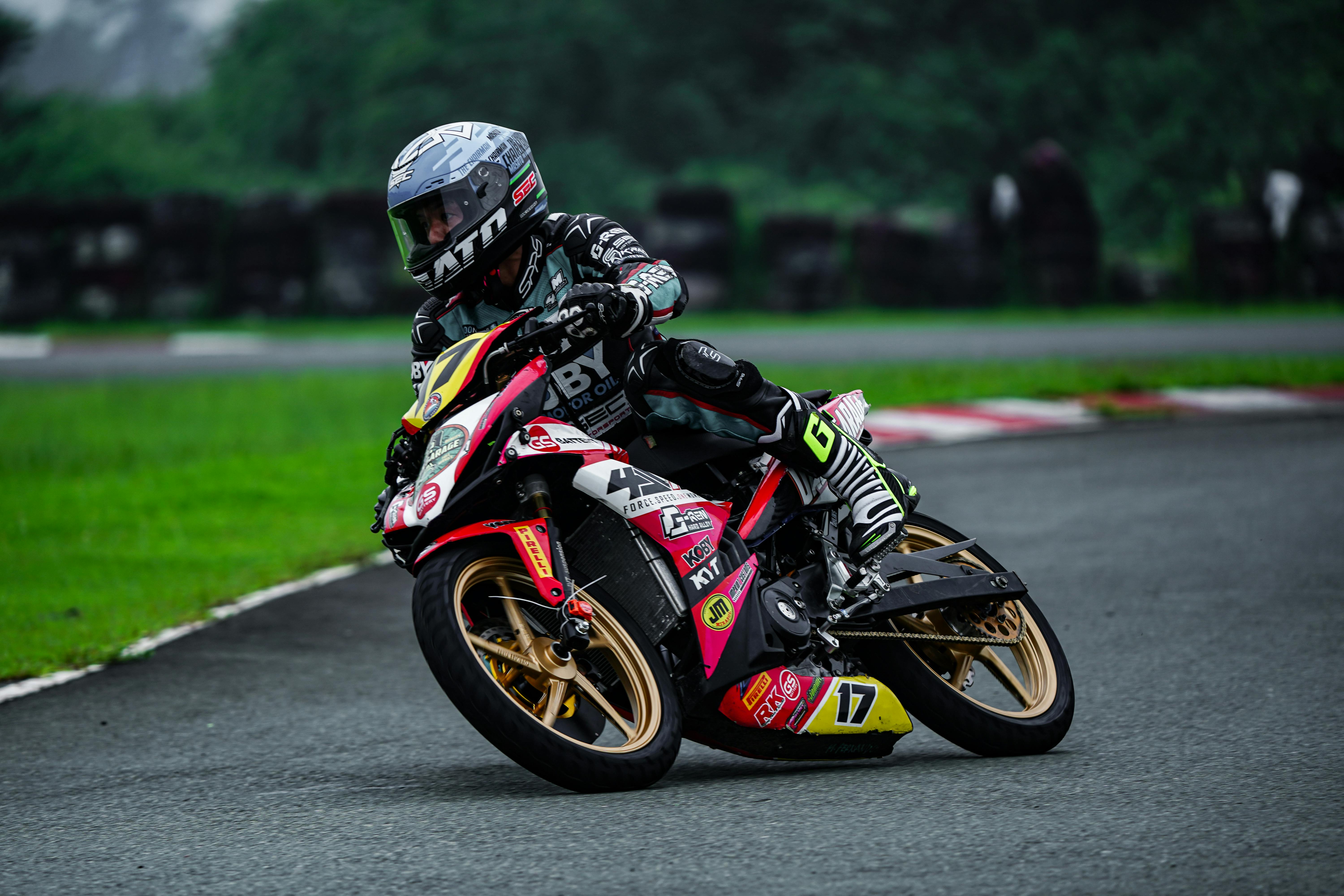
A circuit is too long for any single person to see, yet every driver has to know within seconds what is happening around the next blind corner. Marshals exist to solve that problem, and the way they are organised follows directly from it.
Why the post system covers the circuit
Marshal posts are placed so that each one is visible from the previous one and so that no section of track is unobserved. The spacing is dictated by sightlines rather than by convenient distances.
Each post watches the stretch of track ahead of it and signals to drivers approaching from behind. A driver therefore receives a warning before entering the affected section, not while in it.
That ordering is the whole design. A signal that arrives at the same moment as the hazard has no value at racing speed.
What the flag colours encode
Flags carry a small vocabulary that every licensed driver has learned, which allows instruction without language or radio. Yellow indicates a hazard ahead and requires a reduction in speed with no overtaking.
Red ends the session. Blue tells a driver that a faster car is approaching to lap them. A green flag confirms the track ahead is clear again.
The set is deliberately small because it has to be read in a fraction of a second by someone travelling fast and concentrating on something else.
Why the same signal appears in several forms
Modern circuits duplicate flag signals with light panels and with messages sent directly to the car's display. This is redundancy rather than replacement.
A physical flag can be missed in poor light or hidden behind another car. An electronic panel can fail. Having the same instruction arrive through separate channels means a single failure does not leave a driver uninformed.
The waved cloth remains because it is independent of every system that might go down, and because a marshal can raise it the instant something happens.
What marshals do beyond signalling
Posts are staffed by people trained to recover a stopped car, deal with fire, and reach a driver quickly. The signalling role and the intervention role sit together because the same person sees the incident first.
Recovering a car requires getting people onto a live track, which is why the sequence is always to slow the field first and intervene second.
Decisions about whether a car can be moved safely, or whether the race must be neutralised instead, begin with what the local post reports to race control.
How the information reaches race control
Every post reports to a central room that holds the complete picture of the circuit. Individual marshals see one corner; race control sees all of them at once.
That central view is what allows a proportionate response, because a stopped car in a run-off area and a stopped car on the racing line demand very different actions.
The chain runs from the person nearest the incident to the room that can neutralise the whole race, and its speed is what determines how safe a fast section of track actually is.