
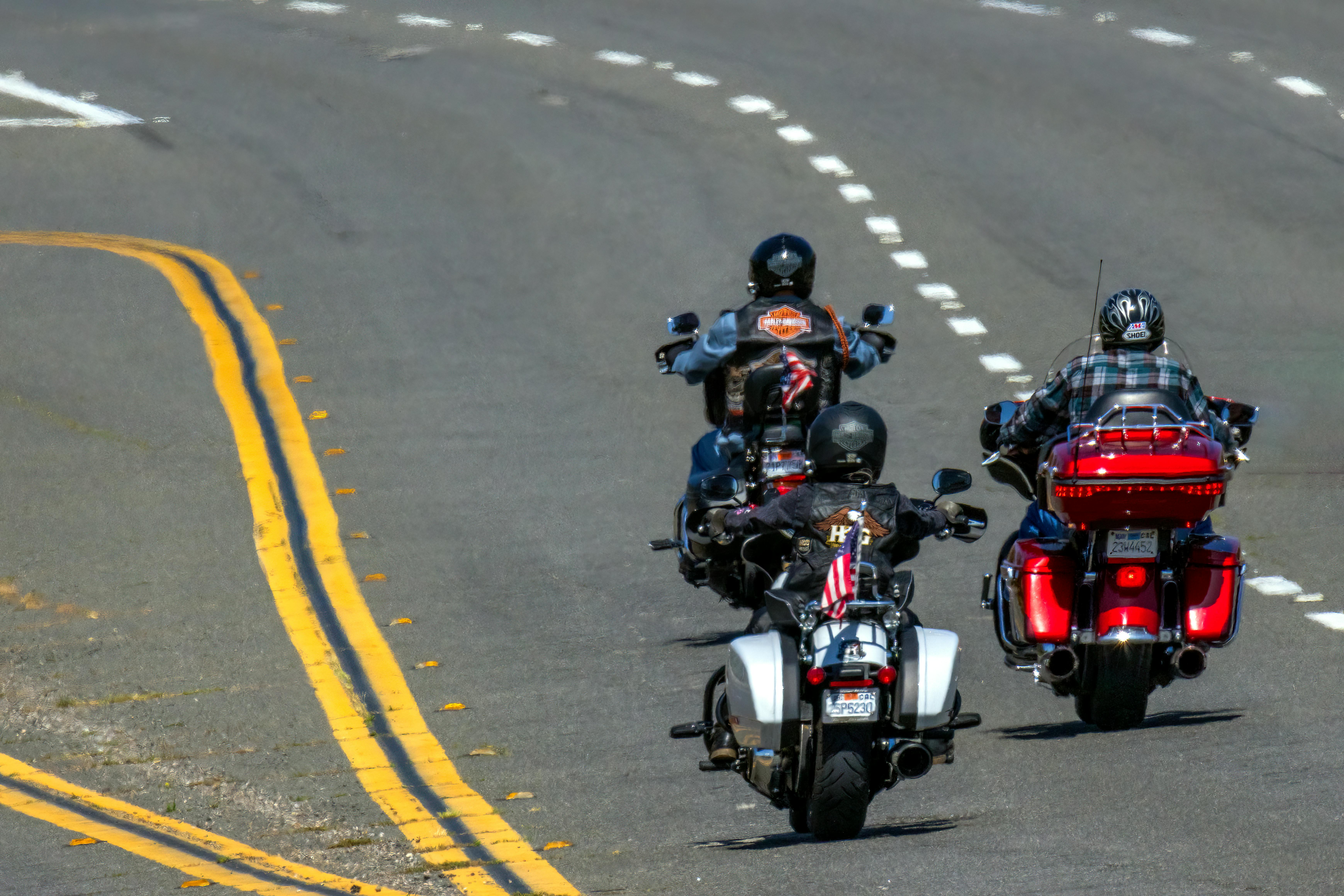
Cruisers remain the defining motorcycle style in the American market. The preference is grounded in how and where most riding actually happens in the country.
Riding position suits long straight distances
A cruiser places the rider upright or slightly reclined, with feet forward and hands at a relaxed height. Body weight rests on the seat rather than on the wrists.
Over hours of interstate travel, that distributes fatigue differently than a sportbike's forward lean, which loads the wrists and neck and rewards frequent direction changes instead.
Most American riding is long and straight before it is technical. The bike shape that suits that terrain became the default and then reinforced itself through familiarity.
Torque delivery matches how the bikes are ridden
Large-displacement V-twins produce strong low and mid-range torque rather than peak power at high revolutions. Acceleration arrives without needing to work the gearbox hard.
That characteristic suits relaxed riding and heavy loads, including a passenger and luggage. It also makes the bikes tractable in slow traffic and parking lots despite their weight.
Riders describe the sensation as effortless, which is a fair account of an engine doing its useful work well below its limit rather than near it.
Low seat height changes who can ride
Cruisers typically place the seat low, letting more riders plant both feet flat at a stop. Confidence at a standstill matters enormously for newer and shorter riders.
Weight carried low also makes a heavy motorcycle feel manageable once moving. The perceived mass drops sharply above walking pace because the center of gravity is low.
Dealers see this in test rides. A bike a rider can hold up at a light gets purchased more often than one that is faster but intimidating stationary.
Aftermarket depth locks in the choice
Cruiser platforms carry enormous catalogs of seats, bars, exhausts, bags and controls. An owner can reshape ergonomics and appearance without fabrication.
That customization culture creates ownership investment and a strong used market. Riders modify, sell within the community and buy another bike of the same family.
Parts availability also keeps older machines running. A twenty-year-old cruiser is straightforward to maintain because the supply chain around it never went away.
Touring capability grows from the same base
Fairings, hard bags and larger fuel tanks turn the same platform into a highway touring machine. The step from a cruiser to a bagger is incremental rather than a switch.
That progression keeps riders inside the category across their riding lives. Style preference then looks like tradition, when much of it is simply an ergonomics decision repeated.
Rallies and long-distance group rides reinforce it socially. The bikes people ride to those events are the bikes newcomers see and then buy themselves.