
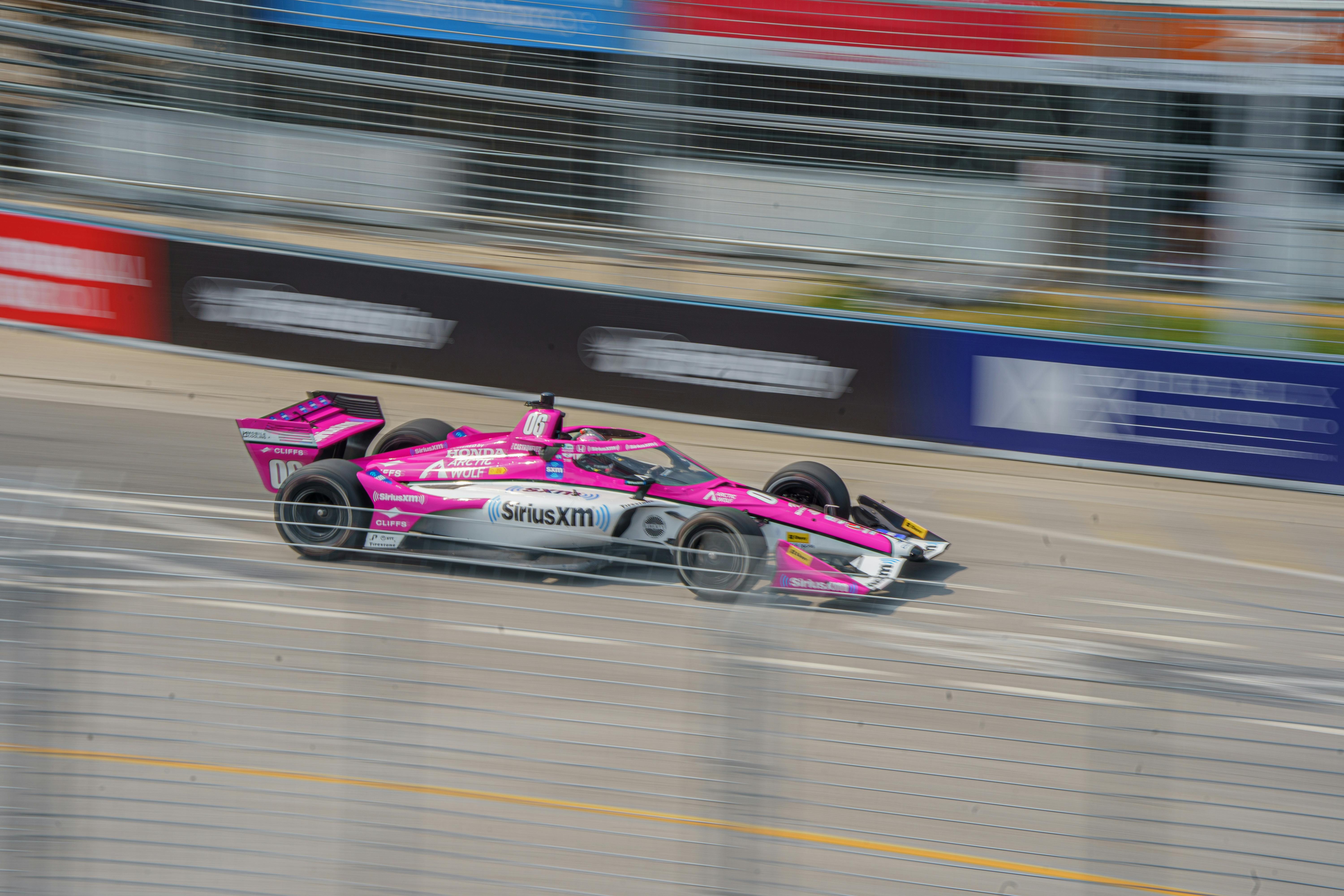
Almost every racing series has altered its qualifying format at some point, often repeatedly. The reason is that qualifying is asked to do several jobs that do not naturally sit together.
What qualifying is actually for
The primary function is ordering the grid so that faster cars start ahead of slower ones. A grid set at random would produce more overtaking but would make the race a lottery rather than a contest.
The secondary function is commercial. A qualifying session is a separate event that can be sold, broadcast and attended, so it has to hold attention on its own terms.
Those two purposes conflict as soon as the fastest way to set a time is also the dullest thing to watch, which is frequently the case.
Why a single open session goes quiet
Given an hour and free choice, teams wait. Track conditions usually improve as rubber is laid down, so the optimal moment to run is at the end.
The result is a session where nothing happens for most of its duration and everything happens in the last few minutes. That is efficient for the teams and poor for everyone watching.
It is also fragile, because a single incident in those final minutes can deny most of the field any representative lap at all.
How elimination formats force activity
Splitting qualifying into segments that eliminate the slowest cars removes the option of waiting. A car that does not set a time early risks being knocked out before it has run.
This spreads running across the session and creates repeated moments of consequence rather than one. It also gives slower teams a visible objective beyond finishing last.
The cost is complexity. A format with several phases, tyre rules and traffic management is harder to follow than a simple fastest-lap contest.
Why traffic became a design problem
Cars on a fast lap and cars returning to the pits share the same circuit, and the aerodynamic wake of a modern racing car disturbs anything following closely.
A driver whose lap is compromised by another car has lost the session through something outside their control, which undermines the fairness the format exists to provide.
Rules on minimum lap times, delta targets and how a driver must behave when not on a timed lap all exist to reduce that interference, and each addition makes the format longer to explain.
Why no format settles permanently
Every format is a compromise tuned to a particular generation of car, tyre and circuit. Change the tyre so that it works best on a single lap rather than several, and the optimal running pattern changes with it.
Series also experiment with grids set by short races or by reversing results, which trade the ordering function for a different kind of spectacle.
The recurring adjustments are not indecision. They are the consequence of a session that has to serve fairness, entertainment and preparation simultaneously while the machinery underneath keeps moving.